As the global demand for eco-friendly packaging continues to rise, bagasse pulp tableware has become one of the most promising alternatives to plastic and Styrofoam. However, the quality of bagasse pulp directly determines the strength, appearance, and usability of the final tableware product. To achieve stable production and meet international standards, manufacturers must focus on optimizing the pulp preparation and refining process.
This article explores practical methods to improve bagasse pulp quality for tableware production, covering every stage from raw material handling to fiber enhancement and quality control.

1. Select and Pre-Treat Raw Bagasse Properly
The first step in achieving high-quality pulp is ensuring the raw bagasse — the fibrous residue left after sugarcane crushing — is clean and consistent.
Key actions:
- Remove impurities: Wash and screen the bagasse to remove sand, wax, and sugar residues. Impurities can cause spots, uneven color, or poor bonding in the final molded product.
- Control moisture: Maintain proper moisture content (usually 10–15%) before pulping. Overly dry fibers are hard to process; overly wet fibers can dilute pulp consistency.
- Avoid microbial degradation: Store bagasse in a dry, ventilated environment to prevent mold growth and fiber decomposition.
2. Optimize the Pulping Process
Pulping is the heart of bagasse processing. The goal is to separate the fibers efficiently while minimizing damage.
Recommended improvements:
- Chemical pulping (soda or kraft): Use sodium hydroxide or similar mild chemicals to dissolve lignin while preserving cellulose.
- Mechanical refining: Apply controlled pressure to separate fibers without over-cutting them. Excessive beating can shorten fibers, reducing strength.
- Temperature and time control: Keep the pulping temperature around 100–130°C and avoid overcooking, which can darken pulp and reduce bonding ability.
3. Adjust Fiber Composition and Refining Degree
The fiber length distribution significantly influences forming and surface quality.
Best practices:
- Balance short and long fibers: Mixing bagasse with a small proportion of long-fiber pulp (such as bamboo or softwood) enhances strength and flexibility.
- Refining degree control: Keep the freeness (measured by CSF) between 250–400 ml, suitable for molded pulp tableware.
- Use fiber classifiers: Screen out excessively fine fibers and dust to prevent uneven density or weak spots.
4. Add Appropriate Additives and Strengthening Agents
Proper chemical additives can dramatically enhance performance without affecting biodegradability.
Common functional additives:
- Retention agents: Help fine fibers and fillers stay in the pulp matrix, improving forming uniformity.
- Sizing agents: Improve water and oil resistance, essential for food-grade tableware.
- Natural strengthening agents: Such as starch, rosin, or bio-based resins to improve bonding and rigidity.
- Bleaching agents: Use eco-friendly hydrogen peroxide for brightness and hygiene without harmful residues.
5. Maintain Consistent Pulp Concentration
During molding, pulp concentration (usually 0.8–1.2%) directly affects product weight and surface smoothness.
Tips:
- Install automatic pulp concentration meters and mixers.
- Ensure continuous agitation to prevent fiber settling.
- Regularly check pulp uniformity before feeding into forming tanks.
6. Implement Quality Control and Testing
To ensure every batch meets production standards:
- Monitor whiteness, pH, and freeness regularly.
- Test mechanical properties of molded samples, such as tensile strength and stiffness.
- Use visual inspection systems to detect color or texture inconsistencies.
Adopting ISO 9001 or similar quality management systems can help standardize production and improve repeatability.
7. Continuous Improvement Through Technology
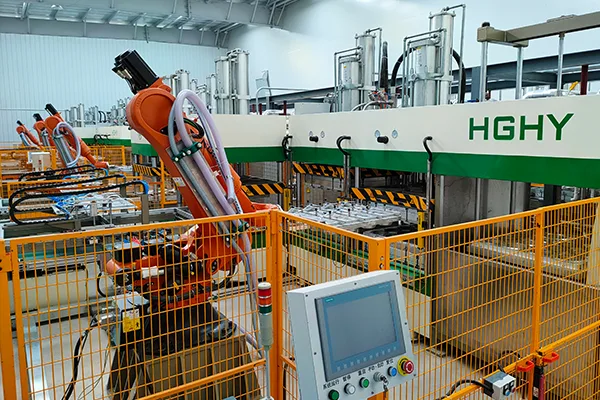
Modern manufacturers increasingly adopt automation and data monitoring to refine pulp quality:
- Online pulp analyzers to track fiber length, consistency, and fines content in real time.
- Closed-loop refining systems that automatically adjust energy and beating degree.
- AI-based quality prediction that correlates pulp data with final tableware performance.
By integrating these technologies, companies can achieve stable pulp performance, lower waste rates, and produce higher-grade biodegradable tableware.
Conclusion
Improving the quality of bagasse pulp is not just a technical process—it’s the foundation of sustainable and profitable tableware production. From raw material selection to advanced refining control, each step directly affects product appearance, strength, and eco-performance.
Manufacturers that invest in consistent pulp preparation, fiber optimization, and automated control systems will not only ensure high-quality production but also strengthen their competitiveness in the rapidly growing eco-packaging market.